
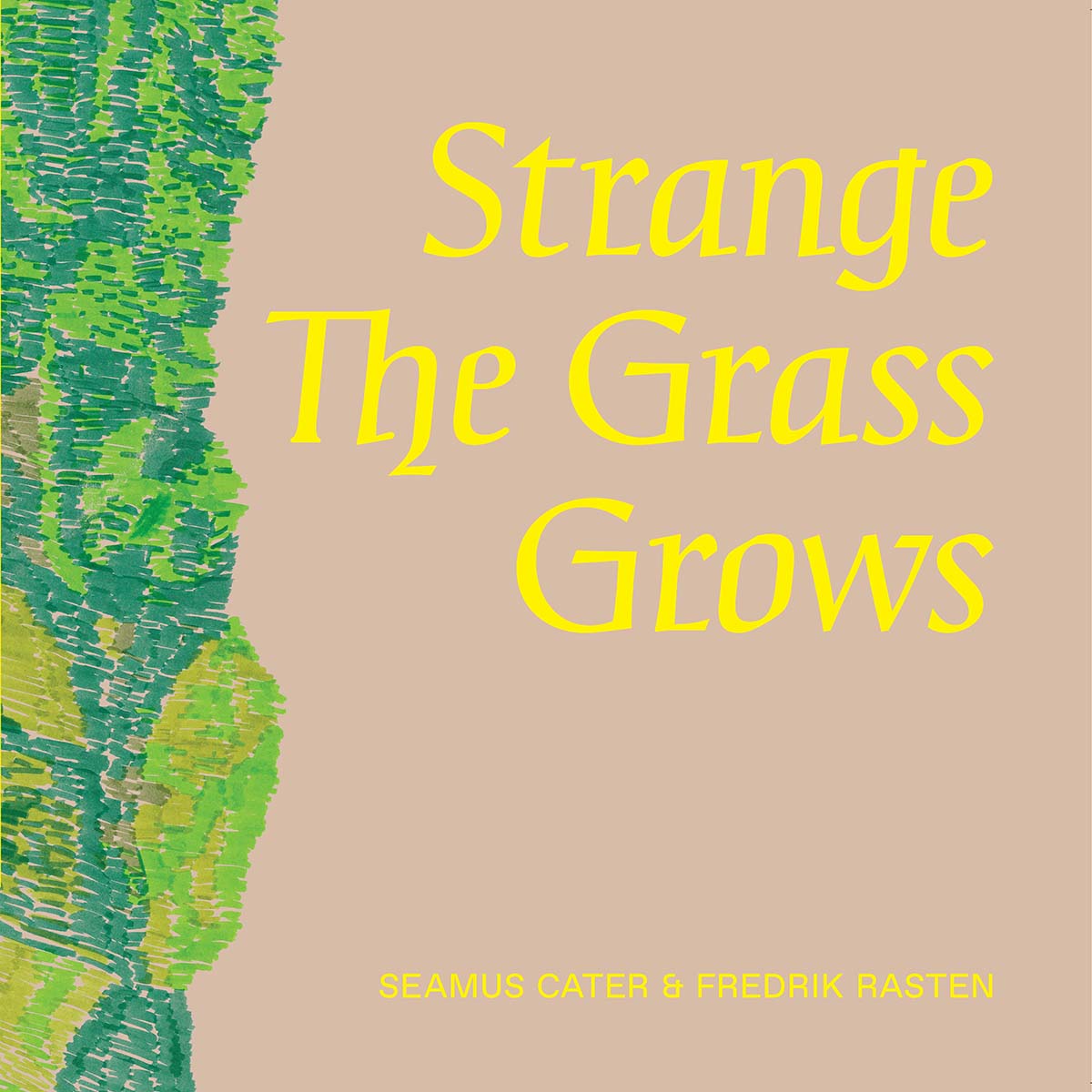
 Strange the Grass Grows - Seamus Cater & Fredrik Rasten (2026)
Strange the Grass Grows is the first album of the Anglo-Norwegian collaboration between Seamus Cater and Fredrik Rasten. The album takes three of the English and Scottish ballads and augments them with three original pieces written by Seamus, which try to represent European folk tales previously unwritten as songs. Sweet Lemeny, Long Lankin and Death and the Lady are accompanied by BeowulfÕs Arm, a short rendering of Seamus HeaneyÕs translation of Beowulf, The Podhajce Goat, a balladic telling of Olga TokarczukÕs mesmeric folktale from The Books of Jacob, and For The Ear That Is No More, a story of the blacksmith that Pythagoras happened upon giving him his eureka moment into the physics of instrument tuning. For Death and the Lady the duo is joined by trumpeter Torstein Lavik Larsen who breathes longing tones into this 14th century milestone of English folklore.
LISTEN HERE
Seamus Cater : voice and concertina
Fredrik Rasten : voice and guitar
A striking factor in the music is a deep resonance in how the instruments and voices blend. Focusing on the careful harmonic and timbral fusion of just intonation tuning, songs evolve in painterly strokes and keep developing in a kind of Ôdeep listeningÕ between the players. Tones which may sound electronic are always acoustic or sometimes electro-mechanical. Rasten is active in the field of just intonation and microtonal music, and for this project Cater tuned a 1926 London made Wheatstone concertina in a system which allows 21 distinct tones to the octave. Informed by a contemporary approach to composition, the duo tread paths between two schools of revivalists, each redefining arts from the ancient past; the collectors who anthologized folk song, and Helmholtz and Harry Partch who breathed new life into the Greek tunings of old. In this meeting of times, Seamus Cater and Fredrik Rasten create and recreate stories in sound and word.
Recorded and mixed by Seamus Cater
Mastered by Jeff Carey
Drawing by Kuno River Hennig-Lee
Design by Mainly Afternoon
Reviews:
Review by Peter Margasak in Nowhere Street (Feb 9th 2026):
I donÕt know a whole lot about the British musician Seamus Cater, whoÕs lived in Amsterdam since 2000, where heÕs long explored twinned interests in experimental minimalism and folk in shifting proportions and styles. I believe I first saw him perform in Berlin on a program at KM28 organized by the International Nothing around the time he and Kai Fagaschinski released their peculiar duo album Secrets, where Cater plays concertina, harmonica, a touch of Fender Rhodes, and sings, both on reductionist pieces and fragile tunes. But I honestly didnÕt really clock his contributions or his larger body of work until much later. A few years ago Another Timbre released his album A History of Musical Pitch, which further illuminated his disparate interests with a post-Wandelweiser speculative music that tried to imagine what it might sound like if the British mathematician Alexander J. EllisÑwho conducted important research into pitch, using tuning forks and oddly tuned concertinasÑwould sound like. As far as I can tell, Cater is an intellectually curious thinker, an artist who eschews any divide between tradition, science, and experimentation [...]
The pairing [Rasten and Cater] makes plenty of sense, as Rasten has followed a similar path in braiding folk and experimentalism, particularly with his recent work with Scottish singer Alasdair Roberts [...]
On the new album they veer toward a more traditional approach, traversing three Scottish and British folk ballads and presenting three Cater originals in the same vein. Although both musicians have sung in previous efforts, this new project puts the focus squarely on that practice, and their ability to harmonize together is stunning, their reedy voices coming together and pulling apart amid delicate fingerstyle guitar and concertina deployed in just intonation, which imparts a deeply resonant, almost glowing harmonic presence. ItÕs all quite subtle, and if you only listen to the way the voices of Cater and Rasten blend you might even miss itÑbut the full sonic spectrum is what distinguishes and, in certain ways, connects it to traditional practice.
I adore the whole recording, but IÕm particularly fond of CaterÕs ÒBeowulfÕs Arms,Ó with lyrics based on the 2000 Seamus Heaney translation of the Old English epic. In fact, all three of his songs draw directly from literary sources, whether its Olga Tokarczuk on the opening tune, or academic Daniel Heller-RoazenÕs book The Fifth Hammer, Pythagoras and the Disharmony of the World on ÒFor the Ear That is No More.Ó In ÒBeowulfÕs ArmsÓ Rasten plays cycling arpeggios as the pair harmonize, the guitarist delivering a surprisingly low, dry presence as Cater provides something more delicate and expressive in his higher pitch. Eventually he begins to trace the chord changes with warm, reedy long tones, which begin to radiate unusual harmonies as the performance unfolds. Gentle melodic variations creep in, with vocal lines that almost seem Beatlesque as the singers push their lines into an upper register. Cater injects a kind of staccato pulsation on his concertina in an extended instrumental section, concluding with a cycling melodic line accommodating new lyrics with each additional repetition. Although the album is pure balladry, unfolding with exquisite patience, each song contains nifty little flourishes or instrumental elements that set them apart, such as the slide guitar and wheezy bass harmonica on ÒFor the Ear That is No More,Ó or the slow peal of trumpet on ÒDeath and the Lady,Ó courtesy of RastenÕs partner in Pip and Oker, Torstein Lavik Larsen.
Review by Glenn Kimpton in KLOF (Feb 25th 2026):
There is a very clean and precise nature to this first collaboration between English avant-garde folk musician Seamus Cater and Norwegian guitarist, improviser and composer Fredrik Rasten. For Strange the Grass Grows, the duo chose three English and Scottish traditional ballads and added them to three original songs written by Seamus. With both musicians having experience in minimalism and microtonal playing, the character of the music is highly considered, featuring super-subtle shifts in notes. Just listen to the careful movement of the concertina on BeowulfÕs Arm, with each delicate change adjusting the mood of the piece.
Strangely, though, the first band that came to mind while listening to the opening song, The Podhajce Goat, was Lankum, particularly their epic The Sea Captain, with its drone notes and slowly progressing vocals. Seamus and FredrikÕs music is lighter, without question, but their ability to minimally adorn their music to allow the song to breathe and the vocals to shine is as expertly done as the Irish supergroup. The song is beautiful, with both voices effective in their telling of the titular goat, inspired by Olga TokarczukÕs epic novel The Books of Jacob.
This impeccable balance between music and vocals is present throughout the album, bringing real cohesion. Lord Lankin is as good an example as any, with a simple acoustic guitar melody (with some very subtle hammer-ons) and concertina framing dual vocals (with a hint of Simon and Garfunkel in places) reciting a traditional ballad. The instrumental interludes throughout this one are particularly pleasurable, bringing freshness to the arrangement. And with none of these six tracks coming in under six minutes, there is plenty of time to allow the players room to draw out the wonderful songs.
Slightly more unusual is SeamusÕs For the Ear that is No More, which sees some slide work on the guitar, plus softly rattling cymbals and bass harmonica. It makes for a quite dreamy sound around an elegiac song performed slowly to allow each strange little brush stroke its own space.
This slow pace continues into the final piece, Death and the Lady, a traditional Roud ballad that brings Torstein Lavik LarsenÕs trumpet into the mix to add body to FredrikÕs sombre pitch pipe. The minimal guitar part serves as a balm for the lower instruments here, bringing light and hope to the sound. As with every song on this quite remarkable album, it is all done with such grace and elegance, without a note wasted or any required. Wonderful.
IÕm very much a fan of this set and the musical decision-making present throughout. Many artists would have been tempted to add to the space in the sound, further embellishing the songs. Seamus and Fredrik have not done this; instead, they have allowed their intuition and experience to shine through. The result is a faultless and deeply considered album of songs performed with confidence and modest prowess. This is one youÕll find yourself returning to again and again